The idea of founding an organization to support adolescents came in 2007. As its name implies, KEEPCARE RWANDA means that all adolescents have access to and equity in quality healthcare to ensure their bright future. It was officially founded in February 2014, when Huye and Nyaruguru districts signed a collaboration letter; in 2017 it got a provisional registration certificate from the RGB, and in 2018 it obtained legal personality.
The organization was born in Huye City because many teen mothers were living in worse life conditions, experiencing sexual gender-based violence, exploitation, abuse, and early unwanted pregnancies. Adolescent pregnancies increased from 6.3% in 2010 to 7.3% (n = 818) of the total pregnancies in 2015, with the highest percentage observed in Huye District (14.2%).
Our development was lifted by strategic interventions such as supporting teen mothers, engaging communities, and setting up youth-friendly KEEPCARE CLUBS in and out of school. Funding from USAID through the TWICECEKA activity boosted our growth, alongside partnerships with Kansas State University, the US Embassy in Rwanda, Rob & Hennie Foundation, Africa International Club, UNDP, and Women for Women International.
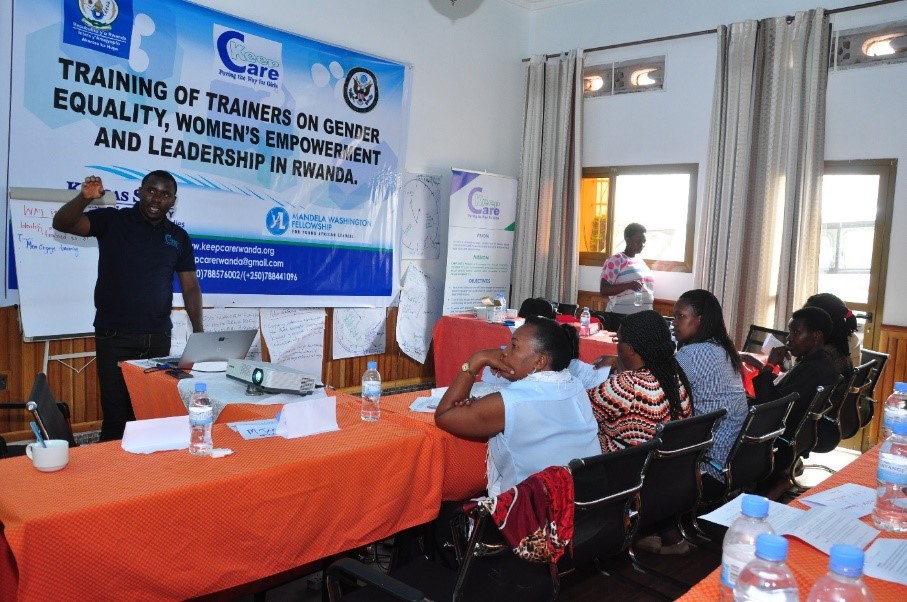
Our Focus
Why KEEPCARE Focuses on Teenagers
Young people's sexuality may cause problems if not properly handled. Most teenagers in Rwanda do not use contraceptives, which can result in unwanted pregnancies. In most sub-Saharan countries, at least 10% of single teenagers of 18 years get pregnant unwillingly due to a lack of information about reproductive health.
Unmarried mothers encounter more difficulties than married mothers, receiving less support from family and community and having fewer resources to raise and educate their children. Sex remains a topic rarely discussed within families, so teenagers turn to peers, books, and media for guidance, where information is often incomplete or incorrect.
Unwanted pregnancies are a long-standing social problem in Rwanda. During pre-colonial times, pregnant girls were ostracized and sent to Ijwi Island, where many died from precarious conditions. Early pregnancies still give rise to problems between parents and daughters, and to social prejudice, psychological trauma and depression for teenagers and their children.
KEEPCARE RWANDA addresses the marginalization and unique challenges facing girls, from discrimination in education, to a lack of opportunity in business, to assaults on their safety and dignity from gender-based violence. We stand for alleviating these challenges and empowering girls socially and economically.
